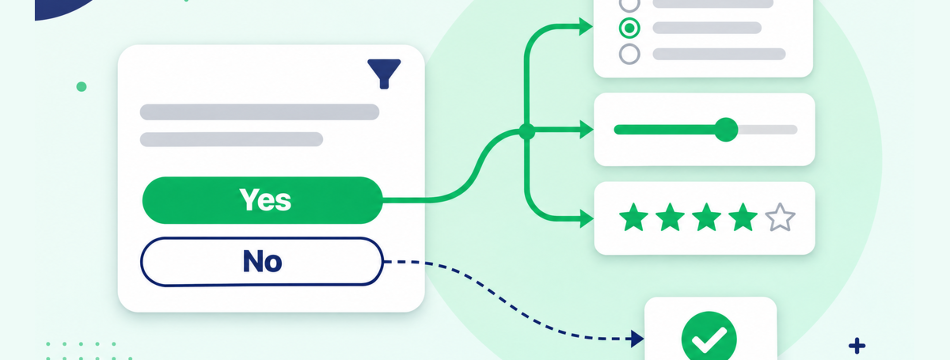
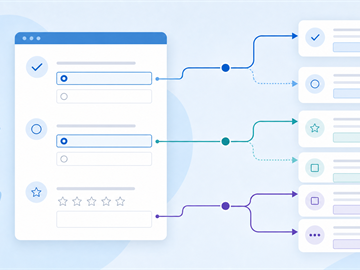
A filter question decides whether a respondent should see the questions that follow it. People who qualify keep going, and skip logic moves everyone else past that block or to the end of the survey, so you get fewer irrelevant answers and more people who finish. Here's how filter questions differ from screening and contingency questions, plus 15 examples with the skip rule each one needs.
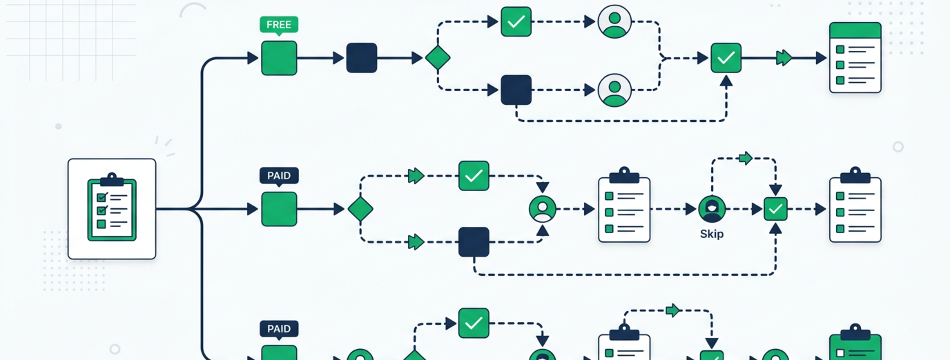
Short answer: QPoint Survey and Jotform both put every logic type, including display logic and piping, on a free plan. For complex survey branching on a budget, QPoint adds compute variables on Free and 3,000 responses a month for €20. SurveyMonkey keeps show/hide logic for Premier at €99 a month billed yearly. Below: 8 tools compared plan by plan, checked November 2026.
A step-by-step tutorial for building a scored quiz that automatically calculates composite results using QPoint's compute variables feature — covering knowledge tests, personality assessments, lead scoring, and research scales.
A practical, six-step guide for freelancers and solo researchers running market research surveys for clients. Covers defining the research question, choosing the right survey type, writing unbiased questions, distribution, and delivering a report your client can act on — on a lean budget.
Compares five survey tools - Google Forms, Tally, SurveyMonkey, Typeform, and QPoint Survey — specifically for freelancers and solo researchers running 2–5 projects a month. Covers skip logic availability, response caps, export formats, and single-user pricing. Ends with a clear decision tree so readers know which tool fits their workflow.